
High Polyphenol Content in Extra Virgin Olive Oil: What the Research Examines
© Content Protection & Intellectual Property Notice
© Olive Oil Hub 2026. Original text and graphics on this page are protected by copyright. Substantial reproduction or commercial republication is prohibited without prior written permission, except where permitted by law. When quoting permitted extracts, please provide appropriate attribution and a link to this page.
Extra virgin olive oil is a traditional component of the Mediterranean diet. Some EVOOs contain measurable levels of naturally occurring polyphenols, including hydroxytyrosol derivatives and oleocanthal. Researchers continue to study these compounds and their potential roles within broader dietary patterns. The composition of an individual oil varies according to olive variety, harvest timing, production methods and storage.
What Are Polyphenols?
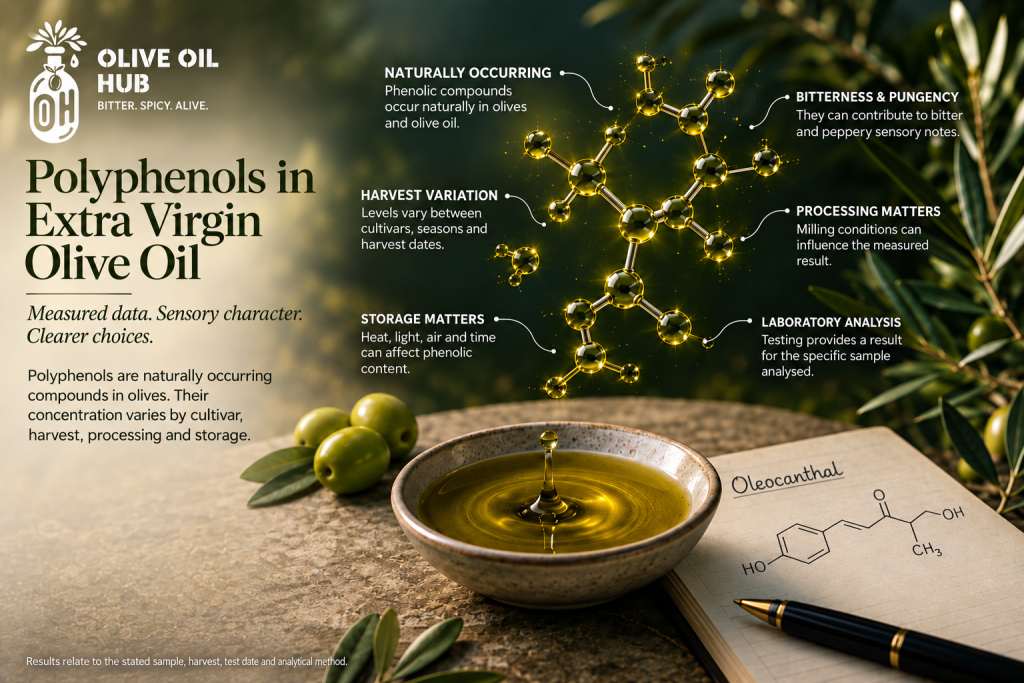
Polyphenols are naturally occurring compounds found in olives and many other plants. Extra virgin olive oil may contain different phenolic compounds, including hydroxytyrosol and oleocanthal, with the type and concentration varying according to olive variety, harvest timing, processing and storage.
These compounds can contribute to the characteristic bitterness and peppery sensation of some extra virgin olive oils. However, flavour alone cannot establish an oil’s polyphenol content. Laboratory analysis is required to provide a measurable result for the sample tested.
High Polyphenol Content in Extra Virgin Olive Oil
A growing body of research is examining the possible effects of consuming extra virgin olive oil containing higher levels of polyphenols. Studies have investigated cardiovascular markers, oxidative stress, inflammatory processes, cognitive function and other areas of health.
The findings vary according to the study design, participants, duration, dosage and the specific olive oil tested. This research does not establish that every high-polyphenol EVOO will produce the same results, nor does it show that these oils prevent, treat or cure disease.
Choosing High Polyphenol Lab-Tested EVOO
Consider early-harvest, cold-extracted extra virgin olive oils. These production choices may support higher phenolic levels but do not guarantee them.
Choose dark glass, tins or other light-protective packaging to help limit exposure to light.
Look for laboratory analysis linked to the specific oil and harvest, including the test date and method where available.
Check the harvest date. Phenolic content can decline over time, although the starting level and rate of change vary between oils.
How to Use It
Enjoy it as part of your morning routine, if preferred.
Drizzle over salads, vegetables, soups or finished dishes.
Use it raw or for everyday cooking. Flavour and phenolic content may change with heat, time and cooking conditions.
Serving needs vary according to the individual and their overall diet; there is no universally prescribed daily amount for high-polyphenol EVOO.
FAQs
Q1: What is the best time to consume high polyphenol extra virgin?
Extra virgin olive oil can be enjoyed at any time of day, either on its own or as part of a meal. Current evidence does not establish that consuming it on an empty stomach maximises absorption of its phenolic compounds.
Q2: Can I cook with it?
Yes. Extra virgin olive oil can be used raw or for everyday cooking, including sautéing and roasting. Heating conditions and cooking time can influence its flavour and phenolic content.
Q3: How should I store it?
Keep it tightly sealed in a cool, dark place away from heat and direct light. Follow the producer’s storage and best-before information, and use the oil within a reasonable period after opening.
Conclusion
High-polyphenol extra virgin olive oil contains naturally occurring phenolic compounds whose type and concentration vary between oils and harvests. These compounds are the subject of continuing scientific research and can also contribute to an oil’s bitterness, pungency and oxidative stability.
Extra virgin olive oil can form part of a varied, balanced diet, including Mediterranean-style dietary patterns. Laboratory analysis provides measurable information about the oil tested but does not guarantee any particular health outcome.
High antioxidant olive oil is a potent natural source of antioxidants and anti-inflammatory compounds. Daily consumption supports cardiovascular health, brain function, bone strength, immune defenses, weight management, and gut health. Incorporate this Mediterranean superfood into your lifestyle to enjoy its full wellness benefits.